If you’re preparing forJP Morgan interview questions or other roles at Corporate Finance roles at JP Morgan, understand this clearly:
The spreadsheet test is where most candidates get eliminated.
This isn’t just an Excel test.
It’s a structured thinking test under pressure.
Crack the JP Morgan Investment Banking Spreadsheet Round
Master NPV | 3-Statement Linkages | DCF | Trading Comps
If you’re preparing for Investment Banking or Corporate Finance roles at JP Morgan, understand this clearly:
The spreadsheet test is where most candidates get eliminated.
This isn’t just an Excel test.
It’s a structured thinking test under pressure.
In this detailed guide, we break down:
✔ How the spreadsheet round works
✔ The exact case types asked
✔ Step-by-step solving logic
✔ What interviewers are actually testing
✔ How to practice strategically
Understanding the JP Morgan Interview Structure
Investment Banking and Corporate Financial Analyst roles typically follow a structured process:
1️⃣ HR Screening Call
- Communication skills
- Educational background
- Role alignment
2️⃣ Online Assessment
- Logical reasoning
- Quantitative aptitude
- Situational judgment
3️⃣ Video Screening
- Structured thinking
- Clarity of explanation
- Confidence
4️⃣ Technical Round 1
- Finance concepts
- Accounting questions
- Valuation basics
5️⃣ Technical Round 2 (Spreadsheet Test)
This is the most decisive round.
Why the Spreadsheet Test Is Critical
This round simulates real analyst work:
- You are given assumptions
- You are given partial financial data
- You must build structured outputs
- You must arrive at valuation conclusions
They are testing:
- Financial statement understanding
- Logical sequencing
- Sign discipline
- Valuation knowledge
- Speed + accuracy
NPV Case – The Perpetuity Trap
📌 Case Setup
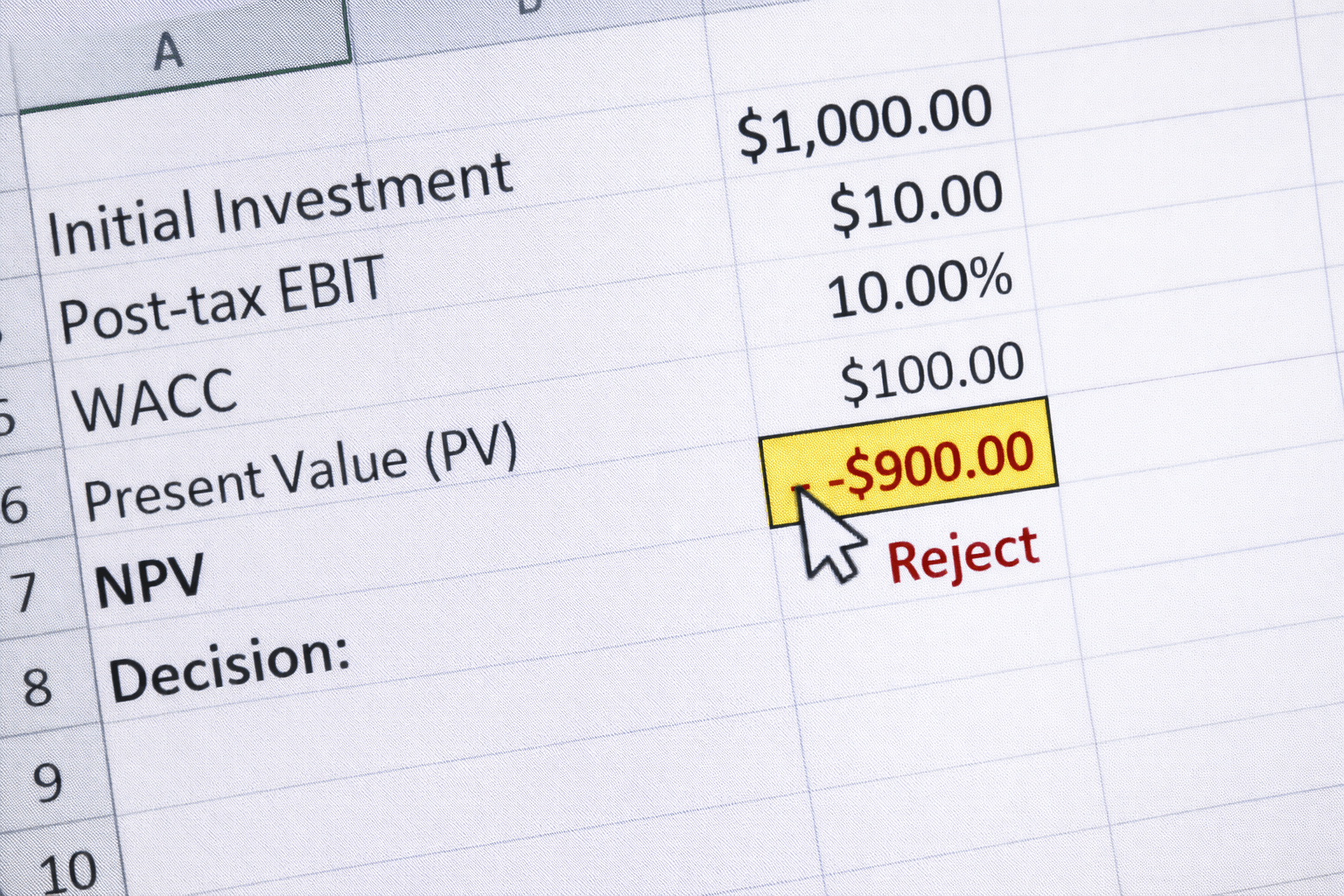
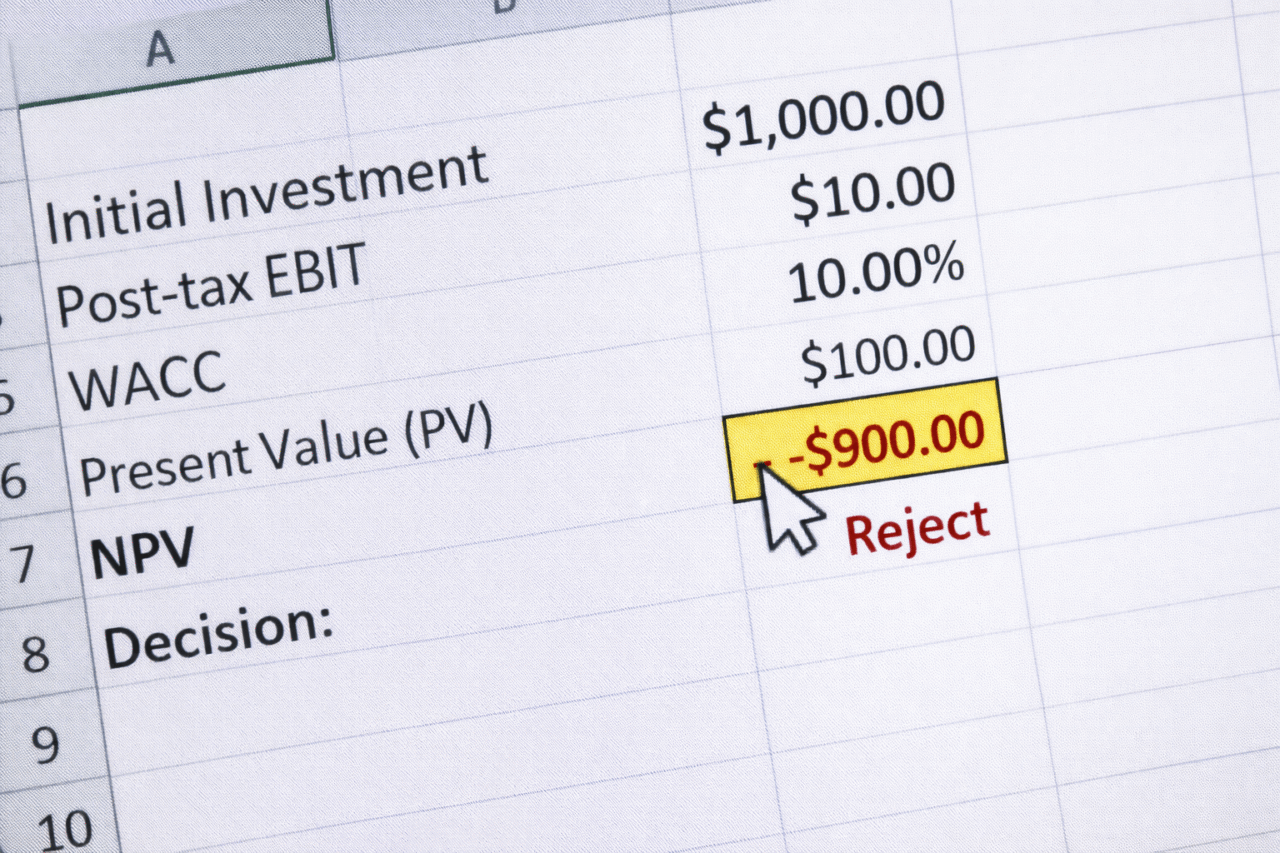
- Project Cost: $1 billion
- Annual Post-tax EBIT: $10 million
- WACC: 10%
- No growth mentioned
Question:
Buy, Sell, or Reject?
🧠 Step 1: Identify the Structure
Since no time period is given and the cash flow is constant, this is a perpetuity.
Use Gordon Model with g = 0:
PV = \frac{CF}{WACC}
PV = \frac{10}{0.10} = 100
🧮 Step 2: Compare with Investment
Investment = 1,000 million
PV = 100 million
NPV = 100 – 1000 = -900
✅ Decision: Reject
The project destroys value.
🎯 What Interviewers Are Testing Here
- Do you recognize perpetuity instantly?
- Do you know when to use WACC?
- Can you convert billion to million quickly?
- Can you interpret negative NPV correctly?
If you want more structured NPV and valuation-based practice, explore our:
👉 Financial Modeling Interview Questions Bank
Financial Statement Linkages Test
This is where candidates start collapsing.
You are given:
- Revenue growth %
- EBITDA margin
- Tax rate
- Depreciation
- Partial balance sheet
- No working capital details
And asked to:
Build Income Statement → Cash Flow → Balance Sheet
🏗 Step 1: Build Income Statement
Revenue
Revenue₁ = Revenue₀ × (1 + Growth)
EBITDA
EBITDA = Revenue × Margin
EBIT
EBIT = EBITDA − Depreciation
Tax
Tax = EBIT × Tax Rate
Net Income
Net Income = EBIT − Tax
💰 Step 2: Build Cash Flow Statement
Start with:
Net Income
Add:
- Depreciation (non-cash)
Subtract:
– Capex (if any)
– Increase in Working Capital (if any)
Result:
Change in Cash
🧾 Step 3: Update Balance Sheet
Assets
Cash = Old Cash + Change in Cash
PPE = Old PPE − Depreciation (if no capex)
Equity
Retained Earnings += Net Income
Debt
Unchanged (if no financing)
🔍 Final Check
Does:
Assets = Liabilities + Equity?
If not — your model is wrong.
🎯 What They’re Actually Testing
- Do you know Net Income flows into retained earnings?
- Do you know depreciation reduces PPE?
- Do you know depreciation increases cash flow?
- Can you maintain sign discipline?
If you’re new to 3-statement modeling, start here:
👉 Financial Modelling Interview Questions for Freshers
DCF Spreadsheet Case
Now comes the serious valuation test.
You are given:
- Base revenue
- Growth rate
- EBITDA margin
- Tax rate
- Capex %
- NWC %
- WACC
- Terminal growth rate
- Shares outstanding
- Net debt
Your job:
✔ Forecast
✔ Build FCFF
✔ Discount cash flows
✔ Compute Terminal Value
✔ Derive Share Price
📈 Step 1: Forecast Revenue
Revenueₜ = Revenueₜ₋₁ × (1 + Growth)
📊 Step 2: Compute EBITDA & EBIT
EBITDA = Revenue × Margin
Depreciation = Revenue × Dep %
EBIT = EBITDA − Depreciation
📉 Step 3: Compute NOPAT
NOPAT = EBIT × (1 – Tax)
💡 Step 4: Free Cash Flow to Firm (FCFF)
FCFF = NOPAT + Depreciation – Capex – \Delta NWC
Common mistake:
Adding capex instead of subtracting.
📐 Step 5: Discounting
Since we use FCFF:
Discount using WACC.
DF = \frac{1}{(1+WACC)^t}
PV = FCFF × DF
🔄 Step 6: Terminal Value
TV = \frac{FCFF_{final} × (1+g)}{WACC – g}
Discount back to present.
🏦 Step 7: Enterprise to Equity
Enterprise Value = Sum(PV of FCF) + PV(Terminal Value)
Equity Value = EV − Net Debt
Implied Price = Equity ÷ Shares
📚 For Deep Valuation Practice
👉 Top 40 Valuation Interview Questions (With PDF)
Trading Comparables (Relative Valuation)
Banks never rely on only DCF.
They triangulate.
Step 1: Compute Enterprise Value
EV = Market Cap + Debt − Cash
Step 2: Compute Multiples
EV / EBITDA
EV / EBIT
Step 3: Find Median Multiple
Use:
=MEDIAN(range)
Or
=PERCENTILE.INC(range, 0.25)
Step 4: Apply to Target
Target EV = Median × Target EBITDA
Equity = EV − Net Debt
Price = Equity ÷ Shares
🔍 Sanity Check
Implied equity should not be negative.
What Separates Selected Candidates
🚀 1. Structured Assumption Box
Keep:
- Growth
- Margins
- Tax
- Capex %
- NWC %
- WACC
- g
Clearly visible.
🧮 2. Unit Consistency
Always write:
“All figures in $ million”
🔄 3. Two Sanity Checks
✔ Balance sheet balances
✔ Implied share price reasonable
Career Strategy Beyond JP Morgan
If you’re building valuation + modeling depth, you should also explore:
👉 Top Internships for Equity Research Analyst in India
Because ER internships build:
- Financial modeling discipline
- Sector analysis ability
- Valuation reasoning
Which directly helps IB interviews.
Interview Pattern Comparison
Different finance firms test differently.
For example:
👉 CRISIL interview structure
👉 Gallagher interview patterns
Understanding multiple formats makes you versatile.
FINAL SECTION: How to Actually Prepare in 10 Days
Day 1–2
3-statement linkage drills
Day 3
NPV & perpetuity variations
Day 4–6
DCF builds (5 variations)
Day 7–8
Trading comps build
Day 9
Timed mock (2 hours)
Day 10
Error correction & speed optimization
Final Thought
The spreadsheet round is not about remembering formulas.
It’s about:
- Understanding how money flows
- Connecting assumptions to valuation
- Maintaining logic under pressure
- Checking your own work
If you can confidently build:
✔ Perpetuity NPV
✔ 3-statement mini model
✔ FCFF DCF
✔ Trading comps valuation
You are already ahead of 80% of candidates.
Related Articles