

Looking to give your B.Com degree a significant boost? Pursuing an MBA after B.Com could be the strategic step that unlocks management positions, higher pay, and international opportunities. However, with numerous entrance exams, specializations, and college options available in 2025, it can be overwhelming. This guide covers everything you need to know: eligibility criteria, exam preparation tips, top colleges, fees, specializations, and real-world career prospects. Whether you’re interested in marketing, analytics, finance, or leadership roles, we’ll help you make informed decisions based on your background, goals, and budget.
For many commerce graduates, moving straight into an MBA provides a fast track to business leadership without changing fields or taking a break. You’ll learn how to build on your B.Com foundation, prepare for key entrance exams like the CAT or GMAT, and select colleges that align with your profile. We’ve also included updated salary data, ROI comparisons, and a detailed 12–18 month plan. By the end of this article, you’ll be able to answer important questions such as: “Can I pursue an MBA after B.Com?”, “Which specialization fits me best?”, and “What are the true costs and benefits?” Let’s get started and guide you toward MBA success. So, b.com is over and you are neither happy nor sad because the next question arises. Should I do MBA After b.com? So, in this article, I will take you through in detail, whether MBA makes sense or not for you.
MBA After B.com
Why MBA?
Now, that’s usually the question, which also come up in your personal interview, for the selection process in an MBA college. At least, in the top MBA colleges, this question is pretty common and rightly so.
So, let me ask you. Are you planning for MBA, because that’s the most common qualification that people add, when they can’t find anything else to pursue?
Or have you really thought about, a career for which you want an MBA?
So, let me give you a couple of pointers, for which not to pursue MBA after b.com.
Reasons not to pursue MBA after B.COM
- Firstly, don’t pursue MBA after b.com for higher salaries.
- Secondly, don’t pursue MBA after b.com, if you are not clear on which field you want to get into.
- Thirdly, don’t pursue MBA if you want to be a technical person only.
- Fourthly, don’t pursue MBA if you don’t intend to get into the top 15 colleges in any country you reside.
- Finally, don’t pursue MBA, if you think adding a masters degree will help you in building your resume
So, I am sure many of you might have thought about MBA, in the above ways. Also, no need to feel weird or bad even if you have thought about MBA degree in the above ways.
What is MBA good for?
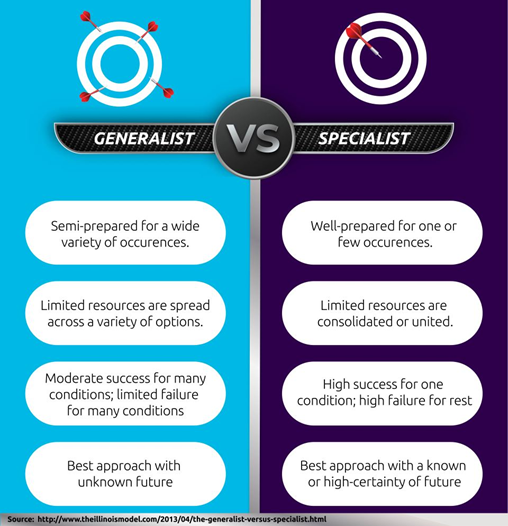
Now, the obvious question that should pop up is, then what is MBA? Well, MBA believe it or not, is a qualification that is absolutely not technical and quite the generalist qualification.
For eg: I should drop the five products and focus on the other five. Or maybe introduce the new five products in some other region. Also, it’s possible that the five products need better marketing. Moreover, it is also possible that the five products have technical issues.
Hence, hopefully, you can make out the word for an MBA guy, “ Jack of all trades, master of none”. So, he is the guy who should be able to understand anything and everything, just enough so that he can take a business decision.
Can you do MBA after Bcom?
Yes, you can definitely do an MBA after BCom. In fact, BCom graduates are among the most common applicants for MBA programs because the degree builds a strong foundation in accounting, finance, economics, and business principles. An MBA helps you specialize further, gain managerial and leadership skills, and access higher-paying roles across fields like finance, marketing, HR, analytics, consulting, and operations. It’s an excellent career-boosting pathway after BCom.
Eligibility
Basic eligibility for most MBA programs in India and abroad:
1.Bachelor’s degree (UG) from a recognized university BCom is fully acceptable.
2.Minimum percentage: Usually 50% or equivalent in graduation (varies by college: SC/ST/PwD relaxations often apply).
3.Work experience: Not mandatory for most two-year MBA programs in India; often required for Executive MBA/ISB/foreign MBAs.
4.Entrance exam: Qualifying scores in exams like CAT, XAT, CMAT, MAT, GMAT, NMAT, etc., are required by most institutes.
Note: Individual colleges set their own cutoffs for scores, past academic performance, and work experience. Always check the college website for exact criteria.
Generalist is Not For Everyone
Generalist roles, over time, can make you feel out of place and will also sometimes make you feel aimless. So tread with caution. I hung my boots for the generalist role for the company, because I felt, If I have to really do that kind of work, might as well do it for myself and for my own start-up.
Which, I did. So, on the bright side, if I think about it, that experience made my setup business a breeze. Of course, a lot has to be attributed also to the culture of the organization and not all generalist roles, have to be chaos.
Career Options after MBA
So, now that I have made it very clear to you the typical industry need of traits of the person. You should be able to understand the career options too.
So, let me break down the roles after MBA, according to the fields of business.
- Marketing
- Finance
- Human Resource
- Operations
So, these are the parts of the business, and an MBA graduate at least from a good college are expected to solve problems in each of these departments.
Marketing
Now, marketing itself is such a small word but if you think about it. My god, my head starts spinning on the kind of problems and work roles that exists.
So, I’ll rather make it simpler by focussing on the stages of the life cycle of a product or service for a company.
- Product Manager: Yes, the same role I got into. You are the guy in the company that has to do everything but never gets credit for anything. So product ideation, product plan, marketing channels, and distribution channels. Most of the time you would be either firefighting or making presentations. And a lot of them.
- Brand Manager: That’s a product manager itself, but brand managers are hired for large FMCG type of products, where the major work is in managing distribution channels and general marketing. So, evaluation of the efficacy of your marketing strategies, creating discount policies, etc.
Finance
So, finance again can be seen in two parts, one is corporate finance roles & the other is investment finance roles.
In corporate finance, the major roles that a person can get into are
- Financial planning
- Strategy or Treasury
Mostly, these roles are technical but a lot of candidates also tend to get into the business side of finance. For e.g.; handing Bond sales for a bank like Citi bank. In which you are assigned a region and are expected to ensure higher sales, customer satisfaction, etc.
On, the other hand an MBA finance guy can also plan his career in roles like equity research, investment banking, investment banking operations, etc. Where the role can be either technical or managerial.
Human Resource
Again, mostly you might think that you would be working as a recruiter but that’s not the case. Since, there are a lot of functions in human resource, which are bigger than recruitment.
The roles, which might be preferred for an MBA with HR are;
- Risk management
- Compensation & Benefits
- Audits and legal compliance
- Performance management
So, if you notice I haven’t added the typical functions of talent acquisition because that is more repetitive in nature, whereas the above roles requires the “Jack of all trades” skills.
Operations
So, the operation is the next big place, with chaos about to burst out of control. So, basically, the ops guy, is there to ensure that the organs of the main business, keep functioning without hiccups.
Now, I’ll list the typical roles after MBA operations;
- Operations Manager
- Production analyst
- Purchase manager
- Distribution manager
- Quality analyst
- Plant manager
Top Colleges & Career Outlook (2025)
India (full-time MBA / PGDM):
IIMs (Ahmedabad, Bangalore, Calcutta, etc.) premier management programs.
ISB (Hyderabad / Mohali) one-year flagship (experience required).
XLRI (Jamshedpur) HR & BM strong.
FMS (Delhi) high ROI.
SPJIMR (Mumbai), MDI (Gurgaon), NMIMS (Mumbai)
Top private: SIBM, XIMB, IMT, Great Lakes, IIFT (for trade/IB specializations), SRCC-X (Delhi).
Global options (popular for BCom grads):
Top UK, Europe and US schools (LBS, INSEAD, London Business School, HEC Paris, Kellogg, Wharton) often require GMAT + experience.
Canada & Australia: Rotman, Ivey, Melbourne Business School, Melbourne Uni.
Global MBA opportunities
In 2025, there will be more demand for MBA graduates worldwide than ever before in the USA, Canada, Singapore, the UK, Europe, and the UAE. With wages ranging from ₹90 lakh to ₹1.3 crore, MBAs in the US land high-paying positions in strategy, product management, consulting, investment banking, and finance, particularly at firms like Google, Amazon, Meta, McKinsey, Bain, BCG, and Goldman Sachs. Supported by PGWP and PR routes, Canada is a growing hub for management expertise, offering positions in consulting, operations, finance, and product management with salaries ranging from ₹48 to ₹72 lakh. With easy Employment Pass choices and wages up to ₹72 lakh, Singapore continues to be Asia’s leading business and finance hub, offering attractive chances in strategy, fintech, investment research, and financial leadership.
Step-by-Step Roadmap (How to go from BCom to MBA)
1. Decide Your MBA Goal & Specialization
Identify why you want an MBA career switch, higher salary, leadership, or domain expertise. Choose potential specializations like Finance, Marketing, HR, Analytics, or International Business.
2. Choose the Right Entrance Exam
Pick exams based on your target colleges:
India: CAT, XAT, CMAT, MAT, NMAT, SNAP
Abroad: GMAT or GRE
3. Start Entrance Exam Preparation
Dedicate 3–9 months to prepare for Quant, Verbal, Logical Reasoning, and, when required, General Awareness. Take mock tests regularly.
4.Register & Appear for the Exams
Apply during official exam windows, upload documents, and book your preferred test dates.
5. Shortlist Colleges Based on Rank, Fees & ROI
Evaluate colleges using parameters like:
a. Placements & average salary
b. Fees & ROI
Typical MBA costs (India)
1.Top-tier (IIM A/B/C, XLRI, ISB): ₹20–42 lakh (total program cost).
2.Mid-tier (SPJIMR, MDI, NMIMS, IIFT): ₹12–22 lakh.
3.Tier-2 / Private / Newer schools: ₹4–12 lakh.
4.Low-cost / Public / ROI-focused (e.g., FMS): ₹1–4 lakh.
Note: Costs include tuition + campus fees; living costs, travel, and opportunity cost.
Scholarships & Funding Options
1.Merit scholarships (college-specific; based on entrance score, academic record).
2.Need-based scholarships (college trusts or government).
3.Diversity & women scholarships (many schools support diversity).
4.Corporate sponsorships / fellowships (for experienced hires).
5.Education loans from banks / NBFCs — often 7–12% interest (check current rates).
6.Early-bird or alumni scholarships (occasionally offered).
Always check each school’s scholarship/loan page and deadlines.
c. Location
d. Specialization strength
e. Alumni network
6. Apply to Colleges & Submit Required Documents
Fill online applications, upload scorecards, SOPs, resumes, and recommendation letters (if needed).
7. Prepare for GD-PI & WAT Rounds
Practice case studies, personal interview questions, current affairs, and communication skills.
8. Accept Offer & Complete Admission Formalities
Once selected, pay the admission fee, submit final documents, and arrange financing or loans if required.
Which entrance after matters for MBA after bcom?
| Exam | Purpose | Typical Frequency |
| CAT | IIMs + 100s of top B-schools | Once a year (Nov) |
| XAT | XLRI + partner schools | Once a year (Jan) |
| CMAT | AICTE-approved management colleges | Once a year (Jan) |
| MAT | Many private & public B-schools | Multiple sessions a year |
| GMAT | International & some Indian B-schools | Year-round (book slot) |
| NMAT / SNAP / MICAT | Specific college entrance tests | Annual windows |
Choose the exam which is most suitable for you. Also make sure to know the timelines. If you are working and want to get into MBA manage your study time as well.
MBA After experience or MBA After B.com fresher?
My straight answer to this is the former, MBA after the experience. The reason is not just because experience, adds any value in getting a good MBA college. Nope, that’s not true and the effect is very minor. However, the real reason why I recommend to get some experience, is so that you at least understand;
- Basic corporate life
- Business functions like sales, marketing
- You learn how to talk to people
- Understand how a business works at the ground level
- Get to learn, that life outside college demands progress and reporting.
So, treat this as an apprenticeship or internship rather than experience. How can a general of the army lead his men to war, unless he himself has fought wars before?
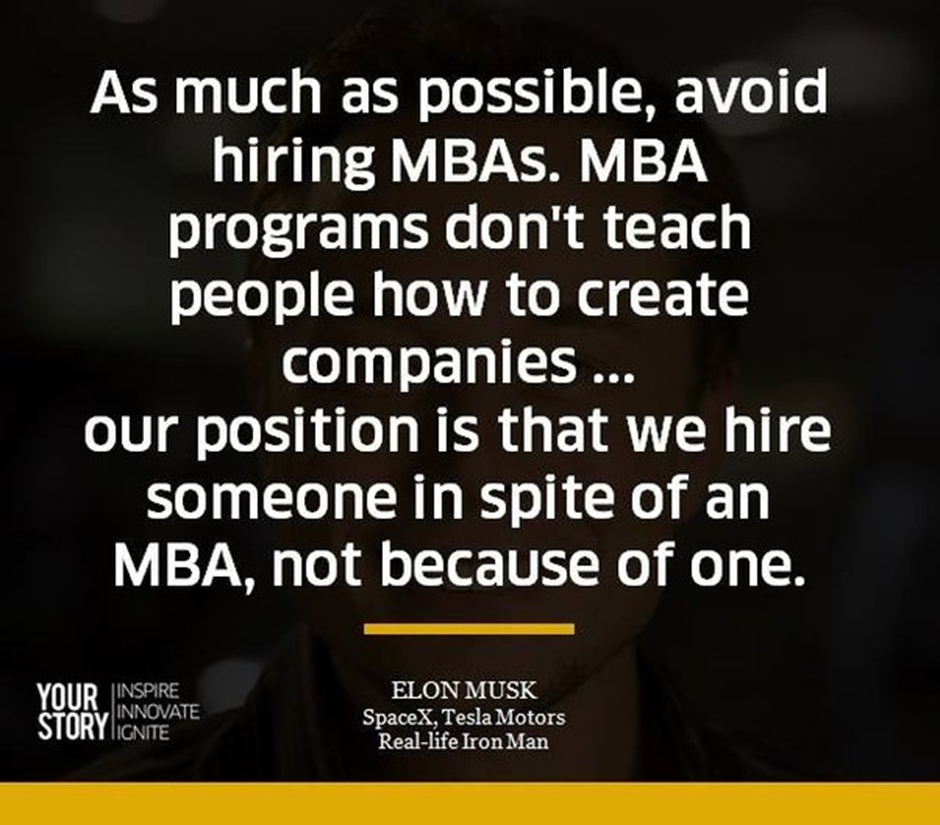
Also, the same reason why Elon Musk, has his de taste of MBA graduates. Because, MBA freshers expect to get a take a parachute and arrive on the top of the hill.
Colleges to Target For MBA after B.COM
Now, let’s foray into the means to get an MBA. Also, let me make it very clear that my list is not sponsored and I really don’t give a *** about the rankings published by any source. This list is based on my experience, with working graduates of these colleges and the type of faculties that they have.
Also, a big “ NO”, for MBAs abroad after b.com, unless its Harvard, INSEAD etc which are the top colleges for business worldwide.
- IIM A,B,C( Ahmedabad, Bangalore, Kolkata)
- XLRI Jamshedpur
- FMS Delhi
- SIBM( Symbiosis Institute of Business Management)
- SP Jain Mumbai
- NMIMS Mumbai
- IMT Ghaziabad
- NITIE Mumbai
- IIM Lucknow
- MICA Ahmedabad
That’s it! So, do not at any cost do an MBA after b.com from any college apart the list I just mentioned. Either, you get into these colleges and do an MBA or you don’t do an MBA at all. Also, the reason why I am so stringent with the list is that any names beyond these is just a compromise.
So, if you notice I haven’t added names like IIM Ranchi because I think the quality is not as good as these names. Sooner or later when you will arrive in the corporate world, the location of IIMs will matter.
Pre- MBA Leg Work
Now, most often than not I understand that you may not get into the above-mentioned colleges in one go. Also, it doesn’t mean that there is something wrong with you. In fact, the aptitude test conducted is by no means, the final indication of your intelligence.
Hence, you need to keep a budgeted time for re-attempts for the CAT exam, for planning MBA after b.com. So, my suggestion would be somewhere between two to three years. While these two to three years get spent, I am assuming that its non-negotiable that you are working parallelly and also building some skills around your areas of expertise.
Exploration- Stage 1- (One to two years)
Right after your graduation, you want to consider the first two years as exploration. So, exploration means trying things out without obsessing too much at the start itself on the final path to take.
This can be done in two ways
- Working with different functions( For eg work in sales, intern at a digital marketing firm)
- Short skill courses, without the obsession of collecting certifications.
Exploration Stage 2(3rd Year)
At this stage, you want to zero on the final area, albeit marketing, finance, Human resource or operations. While, if you have done the leg work then you should also be somewhat clear, on the function you want to work on in these fields as well.
Hence, making sure you do and make a plan not just for 1 year of MBA entrance after b.com. But rather giving yourself, 2-3 years of breathing time, will ensure that 40 years of your career is better and more focused.
Top MBA Colleges For BCom Graduates (India)
| College | Approx. Fees (INR) | Avg. Salary (LPA) | NIRF Rank (latest verify) | Admission Mode |
| IIM Ahmedabad | ~₹24–28 L | ~₹35 LPA | 1 (IIM A often no.1) | CAT / PGPX: GMAT |
| IIM Bangalore | ~₹23–28 L | ~₹36 LPA | 2 (top ranked) | CAT / GMAT (exec) |
| IIM Calcutta | ~₹23–26 L | ~₹33–36 LPA | Top 3–6 (check NIRF) | CAT / GMAT (exec) |
| XLRI Jamshedpur | ~₹22–25 L | ~₹28–34 LPA | Top private (check NIRF) | XAT / GMAT |
| ISB Hyderabad / Mohali | ~₹38–42 L | ~₹32–34 LPA | Not in traditional NIRF management list (check) | GMAT / GRE |
| SPJIMR Mumbai | ~₹20–24 L | ~₹26–32 LPA | Top 20 (check NIRF) | SNAP / GMAT / Institute tests |
| MDI Gurgaon | ~₹17–22 L | ~₹26–27 LPA | Top 10–15 (check NIRF) | CAT / GMAT |
| NMIMS Mumbai | ~₹18–22 L | ~₹18–25 LPA | Top 20–30 (check NIRF) | NMAT / NPAT |
| FMS Delhi (DU) | ~₹2–4 L (very low fees) | ~₹25–30 LPA | Often not listed on NIRF management table; check | CAT |
| IIFT Delhi / Kolkata | ~₹20–22 L | ~₹20–25 LPA | Specialized institute (check NIRF) | IIFT exam / GMAT |
| Great Lakes Institute of Management | ~₹8–12 L | ~₹12–18 LPA | Top 30–40 (check NIRF) | GMAT / Institute test |
| IIT (DMS) / IIM Kozhikode / Other top 10 schools | Varies | Varies | Varies check NIRF | CAT / Institute tests |
Top MBA colleges for BCom graduates in India include the IIMs (Ahmedabad, Bangalore, Calcutta), XLRI, ISB, SPJIMR, MDI Gurgaon, NMIMS, IIFT and FMS. Fees range widely from very low (FMS) to high (ISB, top IIMs) and average salary packages depend heavily on the school and specialization. When shortlisting, BCom students should compare fees vs ROI, placement specialization (finance/analytics/marketing), admission mode (CAT, XAT, GMAT, NMAT, IIFT exam), and NIRF / placement reports for the most recent data.
Parallel Skills Along with B.com for MBA
Finance:
So if you want to explore finance, then you want to start with some hard skills like
- Financial modeling
- Advance Excel
- FP&A
- Python coding
Marketing:
If you begin your exploration for marketing then, you can explore
- Digital marketing
- SEO Marketing
- Social media marketing
- Copywriting
- Marketing management courses
- Also, may be machine learning
The idea is to explore as much as possible at this stage, without worrying too much on what you are going to get. You never know, what you get unless you experience.
MBA Salary after B.com
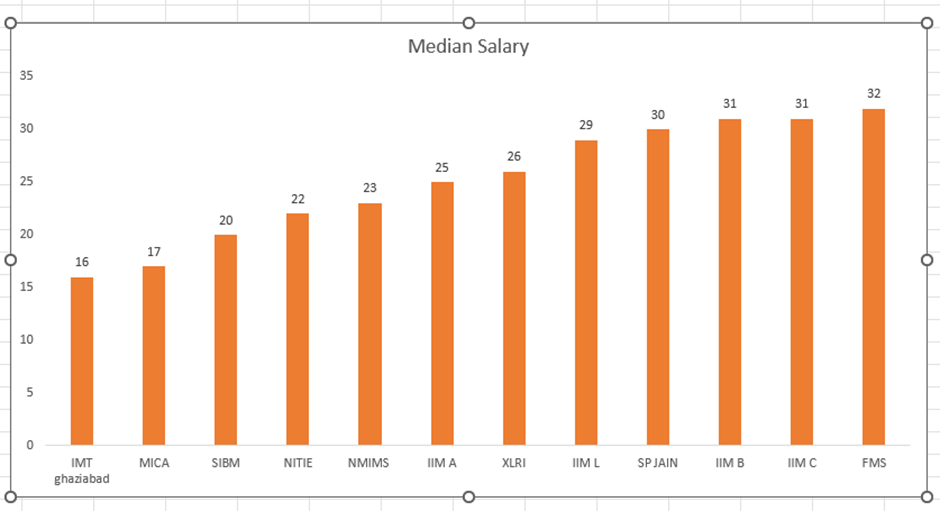
Now, for this I ain’t going to use some third party sources, but I’ll rather use the IIM and another college final placement report. So, that you understand the earning potential, while also understanding the factors that decide it.
Salary Range for MBA After B.com
Below, I am tabulated the median salary of all the top 10 MBA colleges in India, and this is the precise reason why I was saying top 10. So, it doesn’t matter whether you land up in a SIBM or let’s say NITIE, but MBA after b.com hast to be done from these college only. Also, the difference between SIBM & NMIMS is miniscule. Where from XLRI to FMS, the median salary is constant.
Effect of Experience on Salary– MBA after b.com
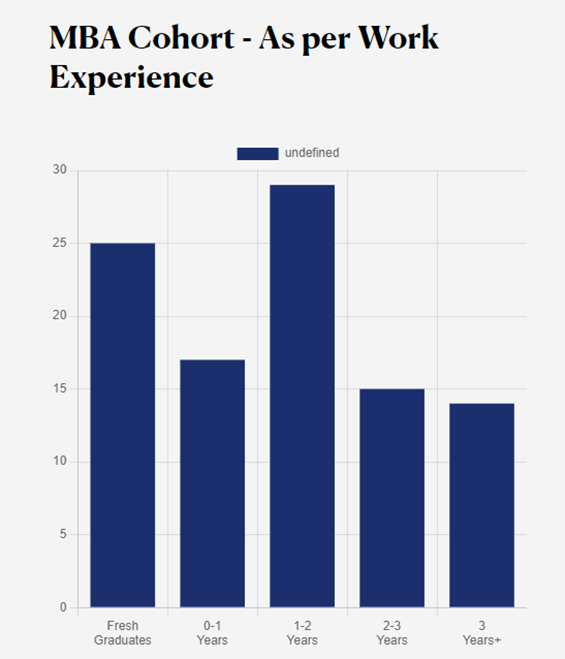
If you look at the above data then clearly you can see that there are ample people in the fresh graduate, 1-2 years & three years and above experience category.
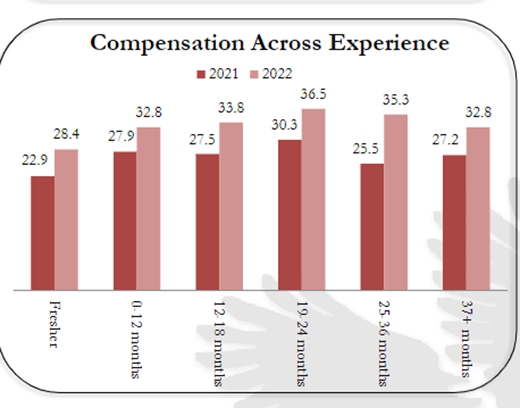
The above statistic is of the FMS Placement report, which shows that 2 to thee years of experience can have a major effect on higher salaries.
At the same time, if we bifurcate the total offers for placements, by salary and function then this is what is given.
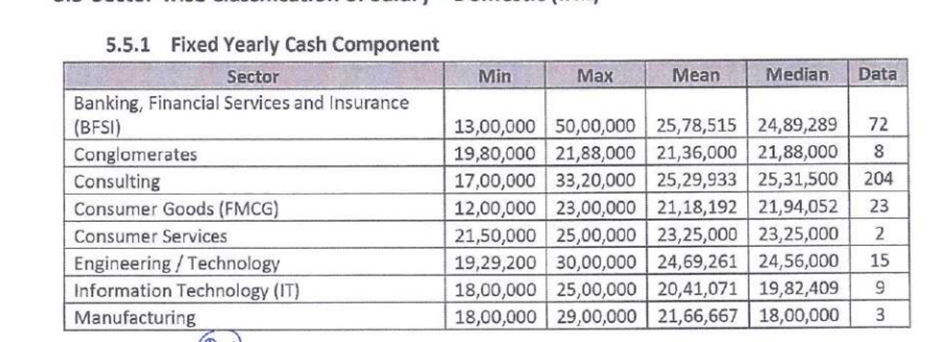
Hence, we can clearly see that the majority of them take up the consulting tole in which the median salary is around 25 lacs. So, I am referring to median because averages will be biased towards the higher salary.
| College Tier | Typical Cost (₹) | Avg Post-MBA Salary (₹/yr) | Example Pre-MBA Salary | Incremental (₹) | Payback (yrs) |
| Top-tier | 28,00,000 | 35,00,000 | 6,00,000 | 29,00,000 | 0.97 (≈11.6 mo) |
| Mid-tier | 12,00,000 | 15,00,000 | 4,00,000 | 11,00,000 | 1.09 (≈13 mo) |
| Tier-2 | 6,00,000 | 10,00,000 | 3,00,000 | 7,00,000 | 0.86 (≈10.3 mo) |
| Low-cost | 2,50,000 | 6,00,000 | 2,50,000 | 3,50,000 | 0.71 (≈8.5 mo) |
H2: Real Career Paths & Salary Examples (entry, 3-5 yrs, 8+ yrs)- chart/table
| Specialisation | Typical Entry Roles (0–1 yr) | Typical Mid Roles (3–5 yrs) | Typical Senior Roles (8+ yrs) |
| Finance | Financial Analyst / Treasury Analyst / Audit Associate -₹5–9 LPA | Senior Financial Analyst / Finance Manager / Investment Analyst-₹12–22 LPA | Finance Director / VP Finance / CFO / Investment Banking VP- ₹30–70 LPA+ |
| Marketing | Marketing Executive / Digital Marketing Associate / Sales Executive -₹4–8 LPA | Brand Manager / Product Manager / Marketing Manager-₹10–22 LPA | Head of Marketing / VP Marketing / CMO / Senior Product Leader ₹25–60 LPA |
| Business Analytics | Data Analyst / Business Analyst / BI Developer -₹6–12 LPA | Senior Analyst / Analytics Manager / Product/Data Scientist- ₹12–28 LPA | Head of Analytics / Chief Data Officer / Senior Data Science Leader ₹25–60 LPA+ |
| Human Resources (HR) | HR Executive / Talent Acquisition Associate / HR Generalist -₹3–6 LPA | HR Manager / Talent Lead / OD Manager ₹8–18 LPA | Head of HR / CHRO / Senior People Leader ₹20–45 LPA |
Major Roles after MBA
Now, let’s dive into the understanding of what roles, get these salaries and that would also help you in understand why I was saying exposure during the graduation days.
If we look at FMS, for example, the major offers are in consulting.
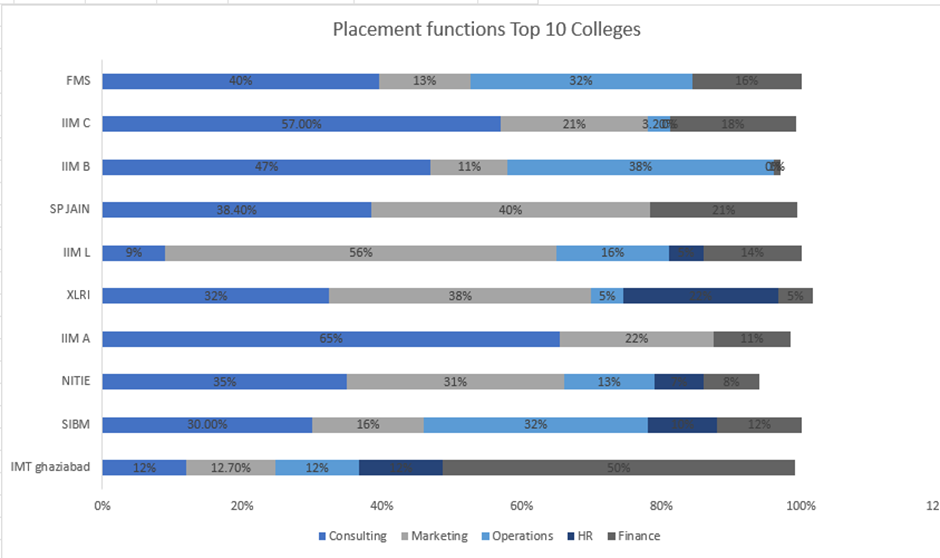
So, what I did is that I consolidated most of the top 10 college placements into functions and the result is presented here. As you can see, apart from IIM Lucknow and IMT Ghaziabad, the majority of placements happen in consulting.
Now, the reason for this trend is because consulting companies like McKinsey, Boston consulting group etc have many functions under which they offer services.
For eg; McKinney can do strategic consulting for marketing, manufacturing, Finance, and operations too. Also, this is where they also get a chance to use your previous education & work experience background for consulting.
Finally, that also enables colleges like IIM’s to get their high bucks, to make MBA a worthwhile endeavor.
Top MBA roles (2025)
| MBA Specialisation | Top Career Roles |
|---|---|
| MBA in Finance | 1. Financial Analyst 2. Investment Banker 3. Corporate Finance Manager 4. Equity Research Analyst 5. Risk Manager 6. Treasury Manager 7. Wealth/Portfolio Manager8. Finance Controller / CFO (Senior Level) |
| MBA in Marketing | 1. Brand Manager 2. Digital Marketing Manager 3. Product Manager 4. Marketing Strategist 5. Sales / Area Sales Manager 6. Market Research Analyst 7. Content & Communications Manager 8. Customer Experience (CX) Manager |
| MBA in Business Analytics | 1. Business Analyst 2. Data Analyst 3. Product Analyst 4. Business Intelligence (BI) Analyst 5. Analytics Consultant 6. Data Scientist (with upskilling) 7. AI/ML Business Strategist 8. Insights Manager |
| MBA in Human Resources (HR) | 1. HR Generalist 2. Talent Acquisition Specialist 3. HR Business Partner (HRBP) 4. Learning & Development (L&D) Manager 5. Compensation & Benefits Analyst 6. Organisational Development (OD) Manager 7. Employee Relations Manager 8. CHRO / Head of HR (Senior Level) |
| MBA in Operations / Supply Chain | 1. Supply Chain Manager 2. Logistics Manager 3. Quality Assurance Manager 4. Procurement Manager 5. Project Manager 6. Plant / Manufacturing Manager |
| MBA in International Business | 1. International Marketing Manager 2. Global Sales Manager 3. Export–Import Manager 4. International Trade Analyst 5. Global Supply Chain Manager |
| MBA in Entrepreneurship / Strategy | 1. Strategy Consultant 2. Business Consultant 3. Founder / Co-Founder 4. Startup Operations Manager 5. Business Development Manager 6. Innovation Manager |
Conclusion:
So, that’s extensive coverage of MBA after b.com, hopefully, the information was useful. I wish you the best, for future success, but always bear in mind that take any education decisions based on such critical analysis.
Also remember, if you are not going to do an MBA from this perspective, then skip it instead. Trust me, you will save a ton, plus you will not be in a spiral fall of remorse later.
1. Build the Skills Every Finance Recruiter Wants with mentor me careers
Learn valuation, Excel, and 3-statement modelling with real case studies.
2. Don’t Just Learn: Get Placed in Investment Banking with help of mentor me careers.
A complete placement-focused pathway for high-paying finance roles.
FAQ
Yes. An MBA after BCom is one of the most preferred career paths because it builds on your commerce foundation and opens doors to higher-paying roles in finance, marketing, analytics, HR, consulting, and management. It significantly boosts your career growth, skillset, and placement opportunities.
The best specialisations for BCom graduates include Finance, Marketing, Business Analytics, and Human Resources (HR). Finance aligns naturally with BCom subjects, while Marketing and Analytics offer strong career prospects and fast-growing job markets.
You must have a recognized bachelor’s degree with at least 50% marks (relaxation for reserved categories). Admission also requires clearing an entrance exam such as CAT, XAT, NMAT, CMAT, MAT, GMAT, or institute-specific tests.
For top Indian B-schools, CAT is the primary exam. Others include XAT, NMAT, SNAP, CMAT, and MAT. For studying abroad, GMAT or GRE is essential.
Yes, some private universities offer direct admission based on merit; however, top-tier colleges (IIMs, XLRI, NMIMS, MDI, SPJIMR) require competitive entrance exam scores.
MBA salaries vary by college and specialization:
1.Top colleges: ₹20–40 LPA
2.Mid-tier colleges: ₹10–20 LPA
3.Tier-2 colleges: ₹5–10 LPA
Your specialization, skills, and internship performance also influence your package.