
Last updated on February 17th, 2026 at 01:34 pm

It is impossible to underestimate the significance of financial modeling training in the ever-changing context of modern business, where choices are frequently influenced by sophisticated financial structures and complex data. With the help of financial modeling, businesses can boost their financial performance, manage risks skillfully, and make well-informed, strategic decisions. In this article, we’ll look at the importance of Financial Modeling Training for company performance and how it enables people and organizations to successfully negotiate the financial industry’s complexities.
Understanding Financial Modeling Training
A systematic educational program that aims to teach the ability to create mathematical representations of financial situations is known as financial modeling training. It involves projecting and analyzing financial performance using spreadsheet programs like Microsoft Excel. However, people who complete the course will be able to build models that replicate different situations. It will help with goal-setting, strategic planning, and decision-making. Moreover, financial modeling expertise reduces risks through scenario analysis, improves the effectiveness of resource allocation, and allows better communication. Additionally, in fields where a thorough comprehension of extensive financial systems and data is required for job progression, regulatory compliance, investment research, and valuation, it is essential.
Moreover, professionals looking to negotiate this complicated and ever-changing world of business and finance must have financial modeling training. With the use of programs like Microsoft Excel, this specialized training gives users the abilities and information required to develop thorough mathematical representations, or models, of financial scenarios.
Importance of financial modelling training for careers
Financial modelling training is essential because there is a significant skill gap between college education and real industry requirements. While academic courses focus on theory, employers expect professionals who can build, analyze, and interpret financial models for decision-making. Most graduates are familiar with basic Excel functions, but Excel-only knowledge is not enough for roles in finance, consulting, or investment banking. Companies require advanced skills such as financial statement modelling, forecasting, valuation, and scenario analysis.
Structured financial modelling training bridges this gap by offering hands-on, practical learning based on real business cases. It teaches how finance is applied in corporate environments, not just how it is studied. As a result, candidates with proper financial modelling training are more job-ready, confident in interviews, and better positioned for higher-paying finance roles, making it a critical skill for long-term career growth.
Financial modelling training program
In India, you will find a lot of financial modelling trainings but what is the outcome? Honestly you just end up with a skill and don’t know what to do next. You need the kind of coaching which provides everything you need to achieve the job role or enter the industry.
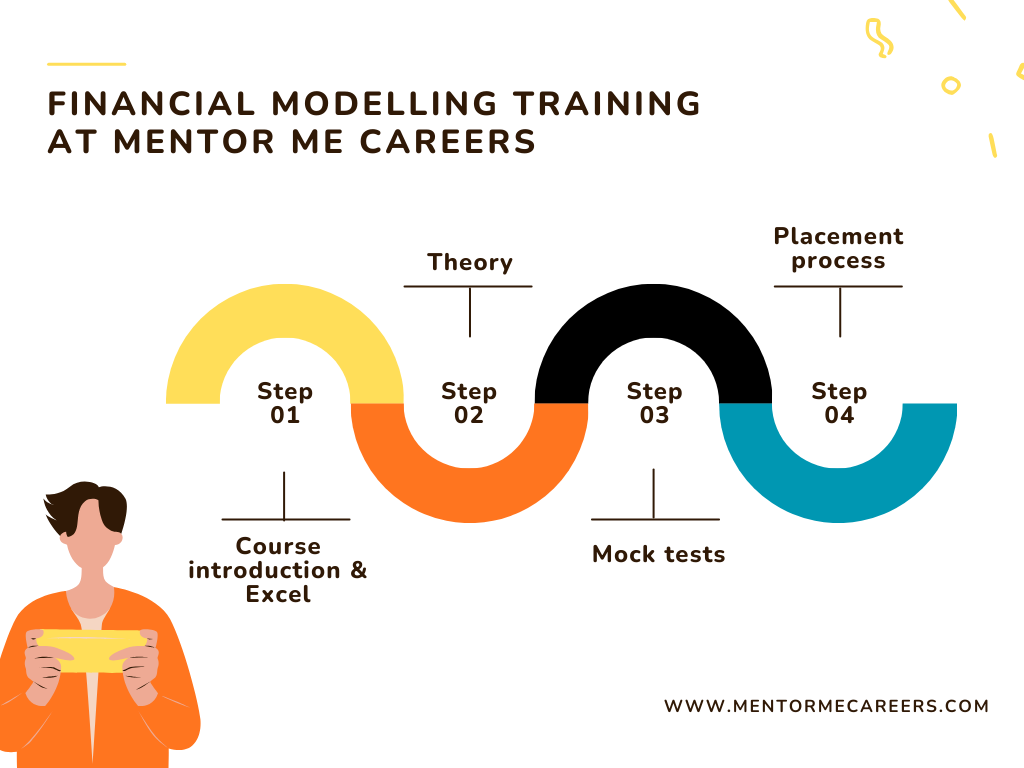
In mentor me careers, you don’t have to worry about tasks. Just enroll, learn & you are ready to go!
We provide you placement assistance, get the mock exams done to check how much you have learnt. On the basis of your result, you get opportunities further. Any issues from your side we will handle it.
Who Should Learn & Why?
Looking to Make A Career in Core Finance?
Financial markets, investing, valuation, mergers & acquisitions, finance analyst – All these roles use financial modeling
Tested in First Round of Interviews
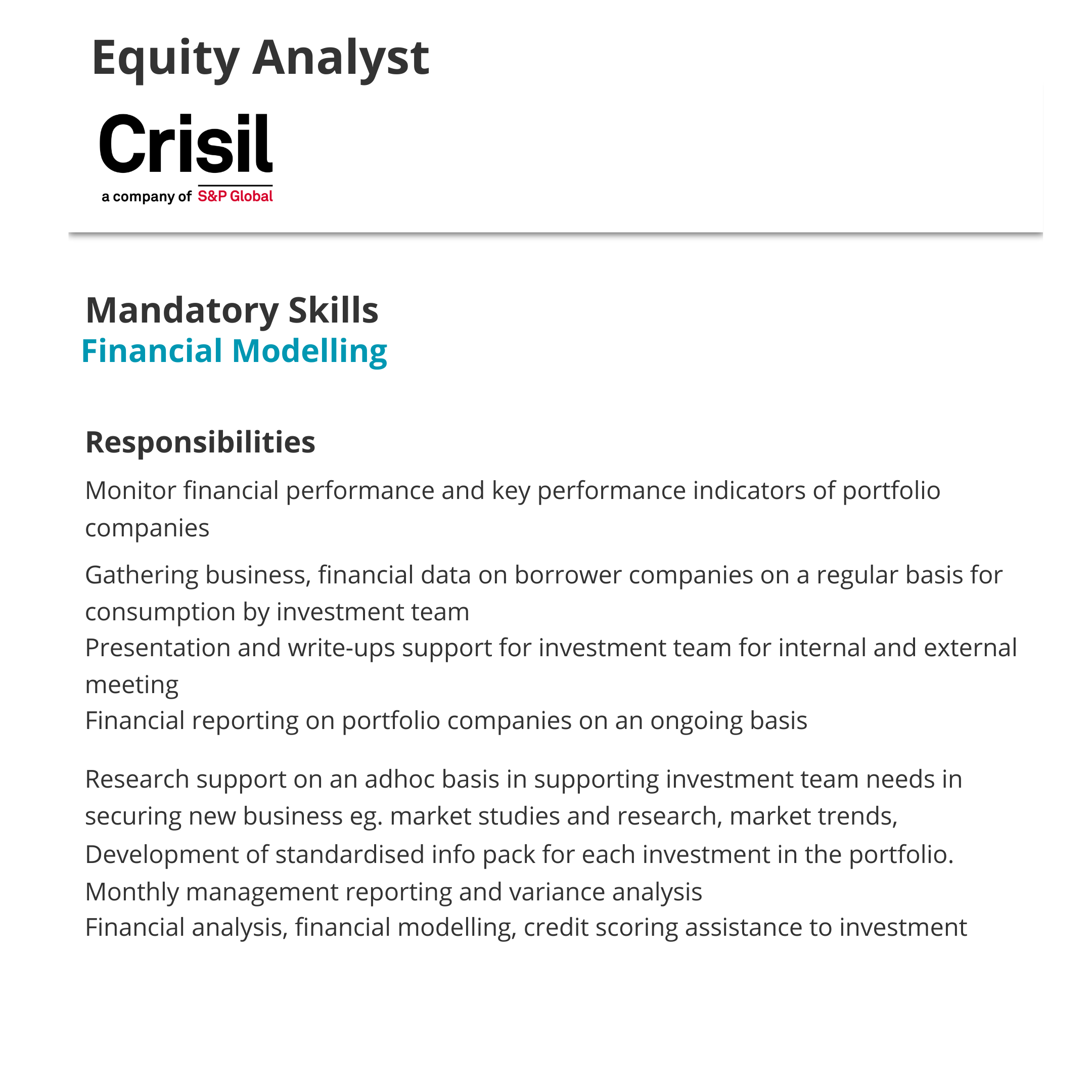
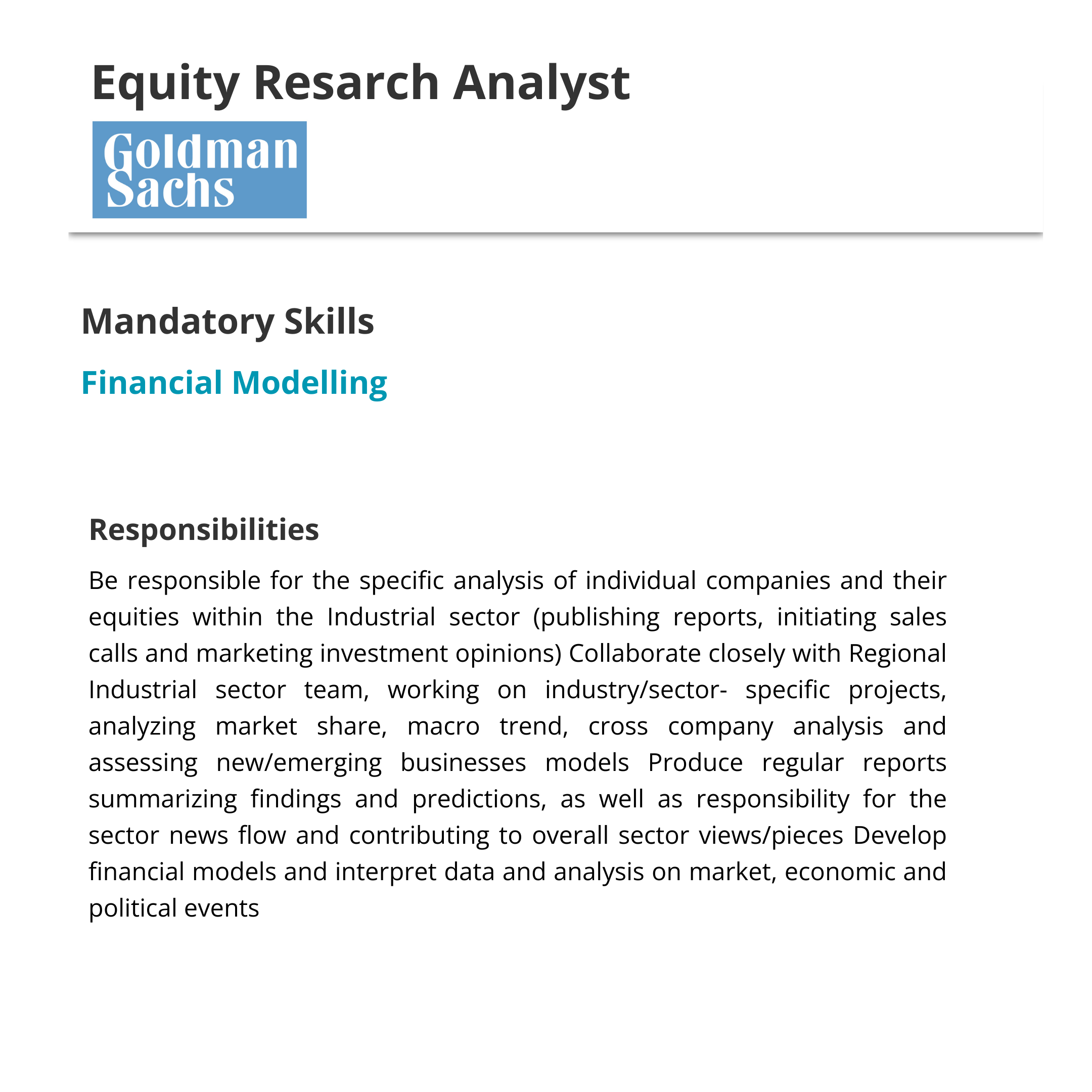
Most of the equity research, FP&A, and Financial analyst positions and any investment decisions roles will test you on this skill
Theory into Practice
The online financial modeling certification course is practical and live. You will apply your finance knowledge to real case studies in stocks, project finance, and wealth management.
Types of financial modelling training
Online: 100% online live lectures
Offline: 100% offline lectures and doubt sessions. Offline is preferred option for everyone since it gives more attention to the candidate.
Self paced: Self-paced is risky, you take the course and might not study that seriously. Studying on your own might confuse & demotivate you. Discipline is must in self-paced type training.
Financial modelling training syllabus
Financial modelling syllabus of mentor me careers include everything needed for a fresher to get placed. Technical skills + important theory. Check out our syllabus below!
Basic to Advance Excel & VBA +
Excel mastery for analysts: shortcuts, dynamic ranges, LOOKUPs, INDEX-MATCH, Pivots, What-If, sensitivity & scenario tools. Intro to VBA for automation.
Fundamentals of Accounting for Financial Modeling +
Three-statement links & flows, working capital, accruals vs cash, common adjustments for modeling.
Financial Modeling Fundamentals +
Drivers, revenue/COGS modeling, operating schedules, debt schedule, interest circularity, model audit & hygiene.
MS PowerPoint in Investment Banking +
IB deck standards, football fields, comps tables, charting, and client-ready formatting.
DCF Valuation +
FCFF/FCFE, WACC, terminal value, bridge to EV/equity value, sensitivities.
Trading Comparable +
Peer set selection, normalization, key multiples (EV/EBITDA, P/E, P/B), adjustments & benchmarking.
Transaction Comparable +
Precedent deals, premiums, control & synergies, deriving valuation ranges.
Football Field Analysis +
Visualizing valuation ranges from DCF, comps & transactions; presentation best practices.
Leverage Buyout (LBO) +
Sources & uses, capital structure, returns (IRR/MOIC), value creation levers & sensitivities.
Merger Model (M&A) +
Accretion/dilution, purchase accounting, synergies, financing & pro-forma analysis.
Valuation of a Banking Company +
Bank-specific statements, NIM/asset quality, regulatory capital, P/B & residual income approaches.
Real-estate Model +
Project cash flows, sales schedules, debt draws, IRR/NPV, sensitivity to price/absorption.
Oil & Gas Company Model +
Commodity drivers, reserves, lifting costs, DD&A, and sector-specific valuation notes.
Tools & Software Used in Financial Modelling Training
Financial modelling training focuses on industry-standard tools that are widely used by finance professionals. Microsoft Excel is the core tool for financial modelling, as it is used to build financial statements, valuation models, forecasts, and scenario analysis. Advanced Excel functions, formulas, and shortcuts are essential for creating accurate and efficient financial models.
Along with Excel, Microsoft PowerPoint is used to present financial insights clearly to management, investors, and clients. Professionals rely on PowerPoint to summarize models, explain assumptions, and communicate recommendations effectively.
Many modern financial modelling programs also include an introduction to Power BI and financial dashboards. Learning Power BI provides a strong career advantage by enabling professionals to visualize financial data, track performance, and support data-driven decision-making. Together, these tools make candidates job-ready for finance and corporate roles.
Financial Modelling Training vs Self-Learning (YouTube / Free Courses)
Self-learning through YouTube or free courses can help with basic concepts, but it has clear limitations. Most free resources are unstructured, outdated, or focus only on isolated Excel functions without explaining how complete financial models are built in real businesses. This often leads to confusion and slow progress.
Guided financial modelling training accelerates learning by providing a structured curriculum, step-by-step guidance, and clear learning outcomes aligned with industry needs. Learners understand not just how to build models, but why certain assumptions and methods are used.
The biggest advantage of professional training is real-world projects and mentorship. Working on practical case studies and receiving feedback from experienced mentors helps learners gain confidence, improve accuracy, and become job-ready much faster than self-learning alone.
Why Choose Mentor Me Careers for Financial Modelling Training
Mentor Me Careers offers financial modelling training designed to match real industry requirements, not just academic concepts. The curriculum is industry-aligned, covering financial statements, valuation, forecasting, and scenario analysis used by finance professionals. Learners gain practical exposure through real-world financial models and case studies, helping them understand how businesses actually operate.
Trusted by Institutions. Proven with Outcomes.
Training Partner for Skills Development


Since 2021
Operating in finance education
50,000+
Students trained across programs
4.9★
Rated on Google
ISO 9001
Certified quality systems
A key advantage is personalized mentorship, where learners receive guidance from experienced professionals who clarify concepts and provide practical insights. Mentor Me Careers also focuses strongly on career guidance and interview preparation, helping students understand job roles, hiring expectations, and growth paths. In addition, resume-building and job-readiness support ensures candidates can confidently present their financial modelling skills to employers, making the training highly valuable for career advancement.
Certification & Industry Recognition
Mentor Me Careers provides a certification after successful completion of financial modelling training, which validates the learner’s practical skills and knowledge. This certification reflects hands-on experience with real financial models rather than just theoretical learning. Industry-recognized certification helps candidates stand out in a competitive job market, especially for roles in finance, consulting, and corporate analysis.
Employers value certifications that demonstrate applied skills, and Mentor Me Careers focuses on skill-based validation instead of simple course completion. The certification serves as proof that the candidate can build, analyze, and interpret financial models confidently. This recognition strengthens professional credibility and increases shortlisting chances, especially for entry-level and mid-level finance roles where practical competence is highly valued.
How Financial Modelling Training Helps in Interviews
Financial modelling training plays a crucial role in interview success for finance roles. Candidates become familiar with common financial modelling interview questions, including valuation concepts, forecasting logic, and financial statement linkages. Training also emphasizes case study preparation, where learners practice solving real business problems using financial models, an approach frequently used in interviews.
Placement Support & Career Assistance
A structured support system designed to make you interview-ready and help you access opportunities—while keeping expectations transparent.
What’s Included
-
3.5 Months of Core Training on Financial ModellingStructured learning path with practical modelling focus
-
Interview Preparation + Case StudiesRole-specific questions, model walk-throughs, and case drills
-
Pre-Interview PreparationShortlisting support, readiness checks, and final prep guidance
-
Interviews Guaranteed for 1 Year*Access to interview opportunities shared over 12 months
-
1 Batch Transfer for Live Classes (Free)One-time batch shift option without extra fees
-
Lifetime Learning Portal AccessRevisit resources anytime as you grow in your career
In addition, learners are trained to handle financial modelling tests and assignments, which are commonly used by employers to assess practical skills. Structured practice improves accuracy, speed, and confidence while building models under time constraints. As a result, candidates can clearly explain their assumptions, calculations, and insights during interviews, significantly improving their chances of selection.
Conclusion
In conclusion, it is impossible to overestimate the significance of financial modeling training for the success of businesses. Being able to confidently and precisely navigate the financial landscape becomes a competitive advantage for firms. It encounters more complexity and uncertainty. After all, professionals can acquire the knowledge and abilities necessary to manage risks. They can interact with stakeholders effectively and efficiently through financial modeling training. Therefore, getting training is an investment in its long-term viability. Also the success of the company as a whole, not just in the development of individual talents. In contrast, Financial Modeling Training becomes essential in a world where making decisions based on data is crucial to business success.
Ready to Move Forward in Your Finance Career?
Take the next step with Mentormecareers. Get clarity on the course, the outcomes, and the path that fits your background.
FAQ
Yes. Financial modelling training is suitable for beginners, even without prior experience, as it starts with Excel basics and gradually covers financial concepts and real-world models.
Most learners take 2–3 months to become job-ready with structured financial modelling training. Advanced proficiency may take 4–6 months with practice.
Yes. Financial modelling training is highly valuable in 2026 due to strong demand in finance, consulting, investment banking, and corporate roles with higher salary potential.
No. A finance background is not mandatory. Many beginners from non-finance backgrounds learn financial modelling successfully with guided training.
Yes. Financial modelling is a core skill for investment banking roles, especially for analyst positions involving valuation, forecasting, and deal analysis.