

Last updated on January 19th, 2026 at 01:00 pm

Investment banking is the highest paying careers in India’s finance sector. Almost everyone has this information about investment banking but what are the actual number that we know? If you are a commerce student, MBA aspirant, or finance enthusiast aiming to break into this elite field, understanding the career path into investment banking is a crucial first step.
The investment banker salary in India spans a very wide range. Freshers (analysts) typically start around ₹6–12 LPA, while senior MDs can earn ₹1–2+ Crore annually. Compensation grows steeply with experience and performance bonuses often match or exceed base pay. According to Glassdoor India, an entry-level IB analyst’s base salary ranges roughly ₹6–19 LPA (average ~₹9–10 LPA), whereas a Vice President earns about ₹39–72 LPA total (median ~₹57 LPA). Notably, top global banks (JP Morgan, Goldman Sachs, Citi, etc.) offer the highest pay, and top domestic firms (Axis Capital, ICICI Securities) also pay competitively.
As we discuss in every salary related article, from entry-level jobs to managing directors at global investment banks, salary packages in this field can vary significantly depending on experience, location and employer. The bonus depends on performance which also differ company to company. In India’s evolving financial ecosystem especially with the rise of private equity, IPO activity, and startup fundraising skilled investment bankers are in high demand.
In this blog, let’s deep dive into Investment banker salary in India, breaking down earnings by experience level, city, firm type and compensation structure. We’ll also provide you some tips on how to increase your pay.
Investment banking salary by role and experience
Based on industry data let’s look at their salary by role and experience
Analyst (0–3 yrs): Base ~₹6–19 LPA, plus modest bonus (~₹1–6 LPA). Typical starting offer ~₹8–12 LPA for top grads.
Associate (3–5 yrs): Base ~₹10–30 LPA. For example, a ₹5–16 L base (avg ₹10L) and ₹0.8–8 L bonus (avg ₹3L). Total comp often ~₹15–40 LPA.
Vice President (5–10 yrs): Base ~₹30–60 LPA. Total VP pay ₹39–72 LPA (median ~₹57 L), with base ~₹28–60 L and bonus ~₹11–12 L.
Director/Executive Director: Base ~₹60–100+ LPA (5–10 Cr per year). Senior directors in large banks often cross ₹1 Cr base, plus big bonuses.
Managing Director/Partner: Base typically ≥ ₹1,00,00,000 (₹1 Cr), often ₹1.5–2.5 Cr. With bonuses, total pay can double or more (₹2–5+ Cr in exceptional cases).
| Role | Experience | Base Salary Range (₹/yr) |
| Analyst | 0–3 years | ₹8 lakh – ₹12 lakh |
| Associate | 3–5 years | ₹15 lakh – ₹30 lakh |
| Vice President | 5–10 years | ₹30 lakh – ₹60 lakh |
| Director (ED) | ~10+ years | ₹60 lakh – ₹1 Cr |
| Managing Dir. | >15 years | ₹1 Cr+ |
Above ranges reflect base pay, actual pay differs by performance and bonuses also perks.
Salaries by city
Mumbai being India’s finance hub typically pays the most in India. For example, investment banking analyst salary in Mumbai ranges from 10-20lakh which is higher than any other city. Tier 1 cities have 10-20% higher salaries.
| City | Analyst (0–3 yrs) | Associate (3–5 yrs) | VP (5+ yrs) |
| Mumbai | ₹10–25 LPA (Med. ₹19L) | ₹15–40 LPA | ₹50–80 LPA |
| Bengaluru | ₹10–15 LPA | ₹15–30 LPA | ₹40–60 LPA |
| Delhi NCR | ₹9–14 LPA | ₹12–25 LPA | ₹35–55 LPA |
| Others | ₹6–12 LPA | ₹10–20 LPA | ₹25–50 LPA |
Larger banks often pay premium. JP Morgan will provide you higher package for the same position but boutique firms won’t be able to match this package.
Investment banking salary components
Generally, investment banking jobs includes something extra than the base salary.
Base Salary: Fixed annual pay.
Performance Bonus: Year-end bonus tied to individual and firm performance. Often 50–300% of base in strong years, bonuses can equal or exceed the base salary.
Equity/ESOP: Stock options or profit-sharing given by some banks, aligning interests with shareholders. (More common in big banks or firms with equity plans.)
Perks & Benefits: Health insurance, retirement plans (PF/pension), and allowances. These are standard in the industry.
Analysis notes that bonuses “can often equal or exceed the base salary”. In India’s 2024 boom, total banker bonuses were projected at ₹1,000 Cr, averaging 3–4× base pay. Such outsized bonuses and long-term incentives (stock grants) are key motivators in IB compensation.
Investment Banker’s Take on IB salary
Q1 What does an investment banker actually do?
A1) Investment bankers advise corporations, private companies and governments on major financial transactions: raising capital (debt/equity), M&A (mergers & acquisitions), restructurings and large financings. Day-to-day they build financial models, write pitchbooks and client presentations, perform due diligence, and coordinate with legal/accounting teams to close deals.
Q2 How are investment bankers paid? What’s the compensation structure?
A2) Compensation usually has three parts: base salary (fixed), annual bonus (performance- and deal-driven), and long-term incentives (stock/RSUs or carried interest at senior levels). For juniors the bonus can be a meaningful multiple of base; for senior dealmakers bonuses and long-term incentives dominate total pay.
Q3 What do entry-level (analyst) salaries look like base and total?
A3) In major financial centers (NYC, London) a first-year analyst base is in the 100–125k USD range at large banks, with total comp (after bonus) materially higher depending on firm performance. In India and other emerging markets entry packages are lower in nominal terms (lakh-rupee levels) but still among the top-paying local roles. Exact numbers vary by bank type (bulge bracket vs boutique) and location.
Q4 How big are bonuses compared with base pay?
A4) Bonuses are highly variable. At junior levels they often range from a fraction of base to 100%+ depending on firm and market. At mid/senior levels bonuses frequently exceed base salary sometimes much more for top producers. Bonus pools are cyclical: bull markets → big bonuses; downturns → smaller or no bonuses.
Q5 How does compensation change with seniority? (Associate → VP → Director → MD)
A5) Compensation increases rapidly with seniority and deal responsibility. Associates and VPs can expect significant base rises plus larger bonuses; Directors/MDs earn far larger total comp driven by deal fees, equity, and long-term incentives. Exact ranges depend on firm and geography; top MDs at major banks can earn multimillion total compensation in strong years.
Q6 Is investment banking “worth it” for the money?
A6) Financially, yes investment banking ranks among the highest-paying career tracks, especially at large banks and in major financial centers. But the pay comes with long hours, stress, and frequent weekend work many junior bankers work very long weeks for several years. Whether it’s “worth it” depends on your tolerance for hours, stress, and career goals (exit options like PE/hedge funds/consulting or corporate roles often make the early grind payoff higher).
Q7 What about work-life balance and hours?
A7) At the analyst/associate level, long hours are common (late nights, frequent weekend work during live deals). Some boutiques or regional banks have milder hours than global bulge brackets, but expect heavy workload when deals are live. Culture varies widely by team and firm.
Q8 Which banks pay the most? Bulge-bracket vs boutique how does pay compare?
A8) Bulge-bracket (Goldman, MS, JPM, BofA, Citi, etc.) and elite boutiques (Evercore, Moelis, Lazard, etc.) typically offer the highest pay and biggest exit opportunities. Mid-market and regional banks pay less on average. However, boutiques sometimes offer competitive bonuses and faster client exposure.
Q9 How much does location matter? (NYC vs London vs Mumbai vs Singapore)
A9) Location heavily affects base and bonus levels and cost of living. NYC & London generally pay the most in nominal USD/GBP, followed by other financial centers (Hong Kong, Singapore). Countries like India and many emerging markets pay less nominally but can be highly competitive locally; cost-of-living adjustments matter.
Q10 What skills and background increase the chance of breaking into IB?
A10) Strong financial modelling/accounting skills, technical Excel/valuation ability, excellent communication, internships at banks, and campus recruiting from target schools all help. Networking, interview prep (technical and behavioral), and solid internships are often decisive.
Q11 Can you negotiate your IB offer? If so, how?
A11) Yes, particularly at the offer stage and for lateral hires. Negotiation levers include base, signing bonus, start date, and role level. For campus offers, negotiation is limited but sometimes possible for exceptional candidates or competing offers. For lateral hires, use competing firm offers and proven deal experience as leverage.
Q12 What are the common exit routes and long-term career options?
A12) Common exits: private equity, hedge funds, corporate development, strategy/consulting, entrepreneurship, fintech/VC. Many use investment banking experience as a springboard because of the transaction experience and network.
Q13 How cyclical is IB hiring and compensation? Can you expect steady raises?
A13) Highly cyclical. Hiring and bonuses follow deal flow and macro markets. In boom years hiring and bonuses expand; in downturns hiring slows and bonuses shrink. Raises and promotions happen, but timelines can shift with the market.
Q14 Practical tips for students/candidates who want into IB this year:
A14) 1) Get solid Excel/modelling practice 2) pursue internships and target-school recruiting 3) network early and often 4) prepare for technical interviews (valuation, accounting, modelling) and behavioral fit 5) consider boutique or regional banks to gain experience if bulge-bracket entry isn’t immediate.
Investment banking top employers in India
In recent years a lot of companies have entered in India. India is growing fast and companies want to capture the market as soon as possible. Talent is there in India in large amount also it is easier to capture the talent. Let’s start from India’s Financial Hub!
Mumbai (India’s Investment Banking Capital)
J.P. Morgan – Global IB powerhouse, with strong India operations in corporate finance and equity research.
Goldman Sachs – Leading roles in M&A, equity capital markets, and private equity; strong grad hiring.
ICICI Securities – Among India’s top domestic IBs with strong retail and institutional reach.
Kotak Investment Banking – Strong in IPO advisory, M&A for mid-market and large deals.
Axis Capital – Dominates in ECM and advisory for emerging companies.
Bengaluru – Tech-Driven & Venture Capital -Focused Roles
Goldman Sachs (Bengaluru office) – Core engineering and front-office quant/strategy teams.
Nomura – Risk, tech, and operations roles; expanding into front-end investment roles.
Morgan Stanley (Bengaluru) – Middle-office, research support, and tech-integrated investment services.
Avendus Capital – Strong in new-age and tech-sector M&A deals.
Delhi NCR (Gurgaon, Noida)
EY India (Investment Banking Advisory) – Strong presence in Gurgaon, especially for transaction advisory.
RBSA Advisors – Known for valuation and restructuring advisory, often hires CAs and MBAs.
Unitus Capital – Impact and social investment banking focus.
Chennai & Hyderabad (Emerging IB Hubs)
Northern Arc Capital (Chennai) – Debt syndication and structured finance.
Credit Suisse (Hyderabad) – Tech-backed finance and global support roles.
HSBC – Mid-office, IB support and research units in both cities.
Industry insights
In Investment banking, deal volume and fees drive bonuses that is why industry trends matter. There are huge bonus pools in Investment banking where if the investments are high the bonus percentages are also very high. In 2024, it was recorded to 300-375% of bonuses. Sectors like Tech and fintech also M&A will always growth and demand for skilled bankers will always be there.
There is also increase in domain specialized analysts where having a specific sector knowledge will land you a investment banking job in that industry, right now EV is booming so they need experts which have worked previously in EV industry.
As a student targeting sector specific internship or project will help in career growth and also pay-scale. Financial modelling skills like 3-statement model making also DCF, LBO and advanced excel practice are highly demanded in the market right now. If you are student and want to start a career in investment banking make sure to have a roadmap about it which includes relevant degree and also qualification. Tier 1 MBA college is top in the hiring list. Qualifications like CA and CFA are highly demanded in the market.
Career growth and progression in Investment banking
Analyst: The entry-level role, focused on financial modelling, creating presentations, and detailed analysis.
Associate: Mid-level position, responsibilities expand to managing analysts, executing deals, and handling client relationships.
Vice president: Manages client interactions, new business opportunities, and strategic tasks. This role often involves direct client management and deal closure.
Director or executive director: Focuses on strategic negotiation and managing large, complex deals. This role involves leadership and networking to drive business.
There are also other opportunities of growth like adding specialization, lateral moves also international opportunities depending on your sector and experience.
How to increase investment banking salary
Recruiters emphasize credentials, skills, and preparation.
Skills: Practice and train yourself for analytical and financial modelling skills which includes advanced excel, valuation also communication are some critical skills
Experience: Secure summer internships at startups or firms which are in finance. Banks often hire people with internship experience in finance than other. Relevant industry exposure helps
Networking: Attend finance seminars, events also alumni events (if possible) connect with bankers on LinkedIn. Constantly be active in relevant forums or social media groups.
Salary Negotiation tips
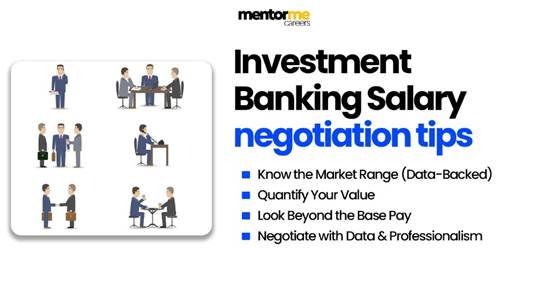
Negotiate the whole package: beyond base, consider signing bonuses, target bonus percentages, and long-term incentives. Even freshers can negotiate: highlight multiple offers, strong credentials, or specialized training. In short, know the market rates and confidently communicate your worth. Emphasize on unique value, your story and experience also technical and non-technical skills. Use realistic benchmarks which will show authenticity.
FAQ
Freshers (analysts) earn around ₹6–12 LPA (Glassdoor avg ~₹12 LPA). Mid-level (Associates/VPs) typically make ₹15–70 LPA depending on years and firm. At the top, Managing Directors can earn ₹1–2+ Crore base (with bonuses pushing total much higher).
If you’re in a top investment bank, long-term pay potential (base + bonus + carried interest) is usually higher than most CA roles. However, CAs in leadership roles (e.g., CFO, finance head) at large companies or partners at Big 4 firms can match or exceed IB salaries.
Analyst in J.P Morgan earn 24 LPA and associates earn 32.4 LPA. You need 0-3 years level of experience to enter core JP Morgan but once entered the pay is very good and stable.
No, its not too late to enter into investment banking. The transition is more possible if you have significant experience from a different industry that can be leveraged. Networking will also help in this situation also you can leverage your age, maturity and discipline.
Uday Kotak founder of Kotak Mahindra bank is considered to be the richest investment banker in India. Uday Kotak is also one the richest Investment Banker in Asia. He stepped down as CEO in 2023 but still exist on board to make important decisions.
Build Relevant Qualifications
Master Financial Modelling & Valuation
Apply to the Right Roles
Leverage Networking
Prepare for Interviews Thoroughly
Create a Targeted Resume
Related Articles