
Last updated on May 24th, 2026 at 03:26 pm
We also refer to fast-moving consumer goods, or FMCG for short, as consumer packaged goods (CPG). You might have frequently purchased these goods on a daily basis, like biscuits, toothpaste, deodorants etc. While, I could also call it, Fast moving consumer packaged foods (CPG). Soft drinks, processed foods, cosmetics like lip balm, eyeliner, deodorants, soaps, and everyday personal care items like toilet paper, face towels, shower caps, toilet soaps, and over-the-counter medications are a few examples of FMCG products. In this article we will discuss the FMCG Full form and details about the FMCG industry.
FMCG Full Form & Industry History
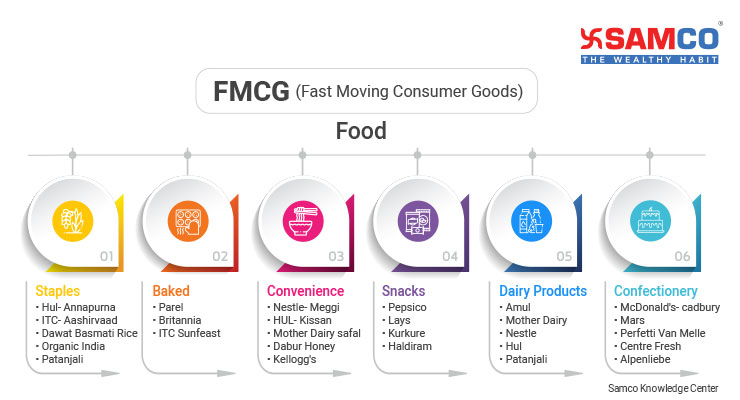
FMCG Full form stands for Fast moving consumer goods. Also FMCG is called “Fast Moving Consumer Goods” because these products have a relatively short shelf life and are quickly consumed or sold within a short period. The term “fast-moving” refers to the high turnover rate of these goods, meaning they are rapidly purchased, consumed, and replaced by consumers. Examples of FMCG include food and beverages, personal care products, household items, and toiletries. Due to their perishable nature or frequent use, FMCG products have a high demand and require efficient distribution channels to ensure their availability to consumers.
Understanding how FMCG companies manage their financial statements and inventory is a core skill for anyone pursuing a career in this sector.
History of FMCG in India
1950–1980: The Dormant Years
The FMCG sector saw very little growth in the three decades after independence. Most Indians had limited purchasing power and prioritised basic necessities over branded goods. The government of the time actively supported small neighbourhood stores and local merchants, which meant large-scale FMCG companies had little room to expand. A few players did manage to establish themselves during this period — most notably Hindustan Unilever (then Hindustan Lever) and Amul — but they were the exception, not the rule.
1980–1991: The Awakening
The 1980s marked a turning point. Rising incomes and greater exposure to the outside world created an appetite for product variety that hadn’t existed before. FMCG companies responded by expanding their product ranges, and new players began entering the market. The explosion of television and print media during this decade also played a significant role — advertising became a powerful tool, and brands that invested in it gained a real competitive edge.
1991 Onwards: Liberalisation Changes Everything
The economic reforms of 1991 were a watershed moment for the Indian FMCG sector. Before liberalisation, imported goods were largely out of reach for ordinary consumers, and brand awareness was minimal. After 1991, trade barriers came down, multinational corporations entered India, and consumers suddenly had access to a far wider range of products — both domestic and international.
The results were dramatic. FMCG companies raced to launch new product lines, build distribution networks, and capture both urban and rural markets. A growing middle class with money to spend — and now products to spend it on — drove consumption to levels India had never seen before. The liberalisation era didn’t just grow the FMCG sector; it created it in its modern form.
FMCG Industry – Current

Current Scenario of FMCG in India (2024–25)
India is today one of the fastest-growing FMCG markets in the world — and for good reason. With a population of 1.4 billion, a rapidly expanding middle class, and increasing rural incomes, the demand for consumer goods shows no signs of slowing down.
The Indian FMCG market is currently valued at over ₹5.8 lakh crore and is projected to reach ₹15 lakh crore by 2025-26, driven by both urban premiumisation and rural penetration. Urban consumers are moving away from basic necessities toward premium and lifestyle products, while rural consumers are buying branded goods for the first time — creating growth at both ends of the market.
Government initiatives have played a significant supporting role. Schemes like Direct Benefit Transfer (DBT), PM Kisan, and rural infrastructure investment have put more money in the hands of lower-income households, directly boosting demand for everyday consumer goods. Any sustained increase in rural income has an almost immediate impact on FMCG sales volumes.
The shift to quick commerce and e-commerce has further accelerated growth. Platforms like Blinkit, Zepto, and Swiggy Instamart have fundamentally changed how urban Indians buy FMCG products — making impulse purchases faster and easier than ever before.
Key Drivers of FMCG Growth in India
Several structural factors explain why India’s FMCG sector continues to outpace most other economies:
Young, urbanising population: Over 65% of India’s population is under 35. This demographic spends more, experiments with new products more readily, and is highly influenced by digital marketing and social media.
Rising tier-2 and tier-3 city consumption: Growth is no longer concentrated in metros. Cities like Jaipur, Surat, Lucknow, and Coimbatore are seeing consumption rise faster than Mumbai or Delhi, as infrastructure improves and disposable incomes grow.
E-commerce and quick commerce: Smartphone penetration and affordable data have brought organised retail to consumers who previously relied entirely on local kirana stores. This has significantly expanded the addressable market for FMCG brands.
Premiumisation trend: Middle-class consumers are actively trading up — choosing premium shampoos over basic ones, organic foods over standard options, and branded personal care over unbranded alternatives. This is pushing average selling prices higher and improving margins for FMCG companies.
Characteristics of FMCG products
- Mandatory use
- Frequent purchase
- Low cost
- No effort to choose
- It comes in a wide range.
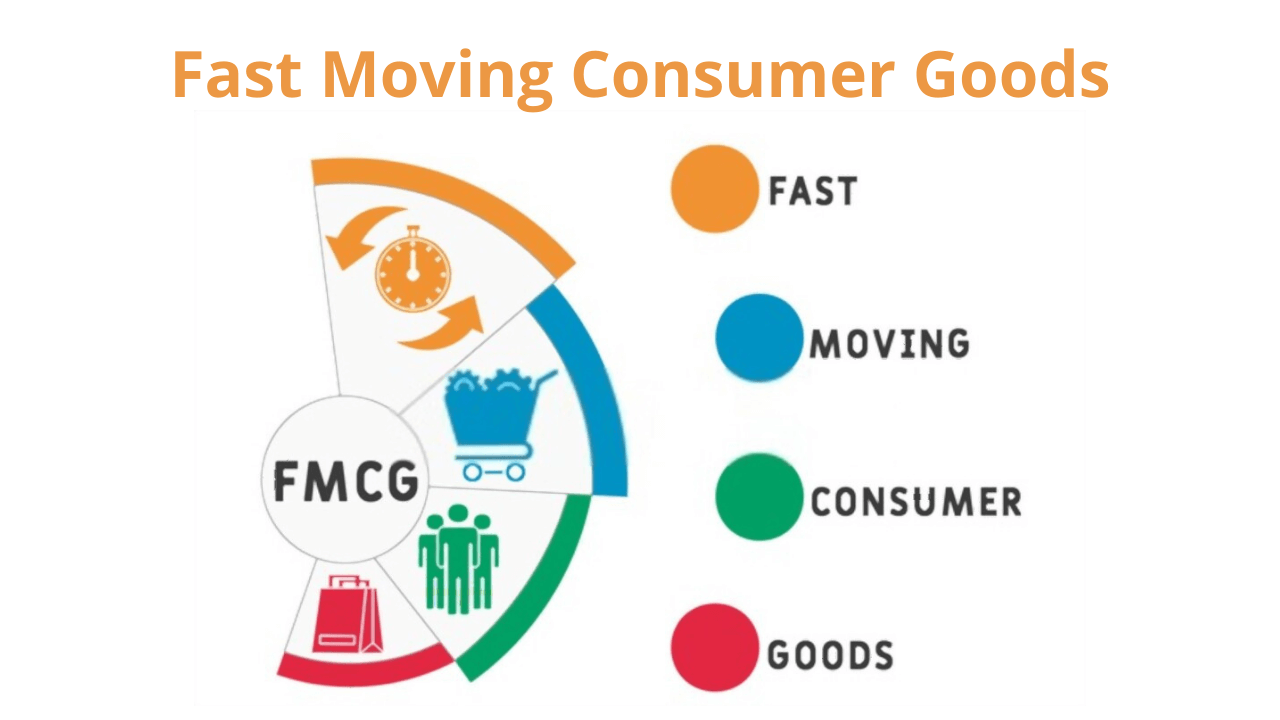
What makes a product “fast-moving”? FMCG goods share five defining characteristics that set them apart from other consumer categories:
Frequent purchase: FMCG products are bought regularly — daily, weekly, or monthly. Think milk, soap, or cooking oil. This high purchase frequency is what drives the sector’s enormous volume.
Low unit cost:Individual FMCG products are typically low-priced, making them accessible across all income levels. The business model compensates through high volume rather than high margins. Understanding the degree of financial leverage helps explain how FMCG companies manage profitability at low margins.
Mandatory use: Most FMCG products fulfill basic daily needs — food, hygiene, cleaning. Consumers cannot easily postpone or skip buying them, which makes demand highly stable even during economic downturns.
Low involvement in purchase decision: Unlike buying a car or a laptop, most FMCG purchases require minimal research or deliberation. Consumers often buy on habit, brand familiarity, or shelf availability.
Wide product range: FMCG spans hundreds of sub-categories — from packaged foods and beverages to personal care, homecare, and over-the-counter healthcare. This breadth makes it one of the most diverse sectors in the economy.
What Does the Indian FMCG Market Look Like?
India’s FMCG market is one of the largest and most complex consumer markets in the world. It spans everything from multinational giants like Hindustan Unilever and Nestlé to regional brands that dominate in specific states or product categories. The sector is responsible for producing, distributing, and marketing goods that hundreds of millions of Indians use every single day.
Market Size and Growth
India’s FMCG sector is currently the fourth largest in the world and one of the fastest-growing in Asia. The market is valued at approximately ₹5.8 lakh crore (around US$70 billion) as of 2024 and has consistently delivered double-digit growth over the past decade, driven by rising incomes, urbanisation, and the expansion of modern retail and e-commerce.
Urban vs Rural: Two Very Different Engines
The Indian FMCG market runs on two distinct engines — urban and rural — and both matter enormously.
Urban markets currently account for around 55% of total FMCG revenue. Urban consumers are brand-conscious, increasingly premium-oriented, and heavily influenced by digital advertising and quick commerce platforms. The top eight metro cities alone contribute a disproportionate share of organised FMCG sales.
Rural markets, however, are where the real growth story is unfolding. Contributing approximately 45% of total FMCG revenues, rural India is no longer just a market for basic staples. Rising agricultural incomes, government welfare schemes, and improved last-mile distribution have created genuine demand for branded products in villages and small towns that previously had little access to them. FMCG companies have responded by launching smaller pack sizes at lower price points — sachets being the classic example — specifically to capture this market.
Distribution: The Real Competitive Advantage
What separates winning FMCG companies from losing ones in India is often not the product itself but the distribution network behind it. India has over 12 million retail outlets — the vast majority being small kirana stores — spread across geographies that are difficult and expensive to reach consistently. Companies like HUL have built distribution networks that reach over 8 million outlets directly, giving them a structural advantage that newer entrants struggle to replicate.
Managing this distribution efficiently requires a deep understanding of the working capital cycle and average collection periods — two concepts that are central to FMCG financial management.
The rise of e-commerce and quick commerce is now adding a fourth channel alongside traditional trade, modern trade, and direct-to-consumer — fundamentally reshaping how FMCG products reach the end consumer.
What changed in the rewrite:
Added concrete examples (HUL’s 8 million outlets, sachet strategy) that demonstrate real knowledge and improve E-E-A-T signals
Replaced the outdated 2018 Asia Pacific growth stat with current market sizing
Expanded the urban/rural split from two vague sentences into a genuinely useful comparison
Added the distribution angle which was mentioned but never explained in the original
Removed “Firstly… Now… Also…” sentence starters throughout
Scope of the FMCG Sector
The FMCG market grew by 7.3% in the final quarter of the 2020 fiscal year. The FMCG market had a growth momentum of 9.4 per cent by 2021 and was conducted both online and offline.
Consumption habits significantly affect the FMCG sector of the economy, especially among young urban residents.
Now, I anticipate the emergence of new product categories within the FMCG sector. These categories will cater to the evolving demands of consumers in the new world, driven by changing habits and lifestyles.
That’s why, if you have to grow your company in the FMCG industry, you can apply for an MSME loan, which will make the process easier for you.
From a career perspective, the sector employs millions across sales, marketing, supply chain, finance, and operations. Leading FMCG companies like Britannia, HUL, ITC, Nestlé, Dabur, and Marico are among the most sought-after employers for business graduates in India. If you are exploring career options after BCom or looking at high-paying careers in India, FMCG is consistently among the top sectors to consider.
From an investment perspective, FMCG stocks are considered defensive investments — they perform relatively well even during economic slowdowns because demand for daily essentials remains stable. Understanding how to analyse FMCG companies requires a solid grasp of financial statement analysis and vertical analysis.
Top FMCG Companies in India
| Company | Key Brands |
|---|---|
| Hindustan Unilever (HUL) | Dove, Surf Excel, Lux, Lipton, Knorr |
| ITC Limited | Aashirvaad, Sunfeast, Fiama, Classmate |
| Nestlé India | Maggi, KitKat, Munch, Nescafé |
| Britannia Industries | Good Day, Marie Gold, NutriChoice |
| Dabur India | Real, Vatika, Hajmola, Chyawanprash |
| Marico | Parachute, Saffola, Set Wet |
| Godrej Consumer Products | Cinthol, HIT, Good Knight |
| Colgate-Palmolive | Colgate, Palmolive |
| Emami | Zandu, BoroPlus, Fair and Handsome |
| P&G India | Ariel, Pampers, Whisper, Pantene |
FMCG Distribution
FMCG products travel through several layers before reaching the end consumer. Understanding this supply chain is essential for anyone working in or analysing the sector.
The typical FMCG distribution chain works as follows: manufacturer → carrying and forwarding agent (CFA) → distributor → retailer → consumer. Each layer adds cost but also adds reach — particularly important in a geographically diverse country like India.
Managing these channels involves careful use of forward contracts for raw material procurement and a constant focus on optimising the working capital cycle to ensure cash flow remains healthy across the supply chain.
FMCG companies also use inventory management methods like FIFO (First In, First Out) to manage perishable goods and ensure older stock is sold before newer stock — a critical practice given the short shelf life of many FMCG products.
Career in FMCG: What You Need to Know
The FMCG sector is one of the best industries to start a career in India. It offers structured training programmes, clear career progression, and exposure to some of the most sophisticated marketing and supply chain operations in the country.
Key roles in FMCG include:
- Sales and Distribution Manager — managing distributor networks and retail relationships
- Brand Manager — overseeing marketing strategy for specific product lines
- Category Manager — responsible for a product category’s P&L
- Supply Chain Analyst — optimising procurement, logistics, and inventory
- Finance Analyst — managing budgets, forecasting, and financial performance
Entry-level salaries in FMCG finance and analytics typically range from ₹4–8 LPA, rising to ₹15–25 LPA at manager level in companies like HUL and ITC.
The analytical and financial modelling skills required for FMCG finance roles — building revenue models, analysing margins, evaluating distribution economics — are exactly what our Financial Modeling Course with Placement is designed to teach. Many of our alumni have gone on to work in FMCG finance and strategy roles at leading companies.
If you are interested in the investment banking and capital markets side of FMCG — mergers, acquisitions, fundraising — our Investment Banking Operations Course covers the operations and deal structures that underpin these transactions. You can also explore how to get a job in an MNC and how to become a financial analyst in India for more guidance on breaking into the sector.
Should you make an investment in FMCG?
Research indicates that investments in this sector are particularly profitable because the demand for FMCG goods is steady all year long.
While multi-brand retail is permitted at a rate of 51%, food processing and single-brand retail are both permitted at 100% FDI.
This will boost consumer spending and stimulate the launch of new products by increasing the employment of FMCG brands, their visibility in the supply chain, and their high visibility in organized retail markets. The sector received a sizable amount of FDI, amounting to US$18.19 billion, between April 2000 and March 2021.
You can either invest money directly in a business or own the business setup that allows you to maximize your returns on investment.
Therefore, you will need the investment if you want to make investments in the FMCG industry. It is advantageous for this industry that investments are low, but returns are high. Therefore, even if you lack the funds to invest, you can still apply for CGTMSE, which supports the expansion of your business.
Rural and urban are the two sides of the FMCG coin!
- A combination of rising income and higher aspirations has led to an increase in rural consumption. In rural India, there is a rising demand for branded goods.
- In FY18, the rural FMCG market had a value of US$23.63 billion. By 2025, the rural FMCG market is anticipated to reach US$ 220 billion.
- The urban market contributes the most to the total revenue made by the FMCG industry in India, with a revenue share of about 55%.
- The rural market is expanding quickly and contributes 45 percent of the total revenues generated by the FMCG industry in India. Fifty percent of all spending in rural areas goes toward FMCG products.
- Rural India is experiencing an increase in demand for high-quality goods and services as a result of FMCG companies’ upgraded distribution systems. Rural markets with low penetration levels have room to grow
Why do FMCG firms have such slim profit margins on their goods?
Consumer goods that move quickly typically have very low-profit margins. Products are therefore widely distributed.
Let’s say you own an IT business that completes Rs 10,000 crore worth of transactions annually and has a 35 percent operating profit margin. In the FMCG industry, the company creates and sells 500 crore rupees worth of goods with an operating profit margin of 5 to 10 per cent, but it does this 40 times. Churn is the key to FMCG’s success!
What are some tactics that FMCG companies use to persuade you to purchase their goods?
- The price of 4 soap cases is reduced to that of 3.
- Free gifts are provided. With a large pack of FMCG items, some plastic-free utensils are provided.
- Continuous marketing The constant barrage of advertisements for products on TV, in print, and on social media automatically imprints the product in your mind, and when you see it in person, you are more likely to purchase it. The best examples of this are online retailers like Amazon.
- When you conduct a product search, close the tab, and visit other websites, the same product advertisement will display for you on all of the web pages.
- Lower prices for larger products encourage consumers to spend more by driving up their purchases. Imagine that a 1.5 kg packet of Quaker Oats costs Rs 200 on Amazon, while a 1 kg packet costs Rs 170.
What phases make up an FMCG product?
There are typically four stages to a fast-moving consumer good.
1. Introduction
When a product enters the market for the first time, we introduce it. To generate consumer demand for the product, we typically provide samples for consumers to try before they make a purchase. From the perspective of the customer, this stage aids the business in identifying potential problems the product might have.
2. Growth Stage
Following the product's introduction to the market, sales increase, and customers begin purchasing the product as needed. At this point, the general public is aware of the features and advantages of the product.
3. Maturation stage
Production costs typically decrease at this stage because the product has already sold several times during the growth stage. At this time, sales usually peak, and the price of the product decreases. Competitors introduce their own products at this point, each with a similar set of features.
4. Stage of decline
Sales would have significantly decreased, the product's price would have increased, and customers would have a propensity to purchase other goods. At this point, making a profit becomes very challenging. When the product reaches this point, it is then stopped.
Conclusion
The FMCG sector is one of the most resilient and enduring industries in the Indian economy. Unlike discretionary purchases that consumers can delay — a new car, a television, a holiday — FMCG products are non-negotiable. You cannot postpone eating, bathing, or cleaning your home. This inescapable daily demand is precisely what makes FMCG such a stable and attractive sector, both as a career destination and as an investment opportunity.
For India specifically, the story is still in its early chapters. With hundreds of millions of rural consumers yet to be fully captured by organised FMCG brands, a young urban population actively trading up to premium products, and quick commerce reshaping how goods reach consumers, the sector's best growth years may still lie ahead.
Whether you are a student exploring career options, a professional considering a move into consumer goods, or someone trying to understand how India's economy works at ground level — understanding FMCG is essential.
Want to Build a Career in Finance or FMCG?
The analytical skills that FMCG companies — HUL, ITC, Nestlé, Britannia — look for in their finance and strategy teams are exactly what our courses are designed to teach.
Investment Banking Operations Course— understand the investment banking operations that fund FMCG expansion and M&A
Financial Modeling Course with Placement — learn the valuation and analysis skills used by FMCG finance teams
Frequently Asked Questions
What is the full form of FMCG? FMCG stands for Fast Moving Consumer Goods — products that are purchased frequently, consumed quickly, and sold at relatively low prices.
What are examples of FMCG products in India? Common examples include biscuits, shampoo, toothpaste, soap, soft drinks, packaged snacks, detergents, and over-the-counter medicines. Brands like HUL, ITC, Nestlé, and Britannia are among the largest FMCG companies in India.
What is the size of the FMCG market in India? India's FMCG market is valued at approximately ₹5.8 lakh crore (around US$70 billion) as of 2024 and is projected to reach ₹15 lakh crore by 2025-26.
Is FMCG a good career option in India? Yes. FMCG is one of the best sectors to start a career in India, offering structured training, strong brand names on your CV, and clear progression paths in sales, marketing, supply chain, and finance.
What is the difference between FMCG and CPG? FMCG (Fast Moving Consumer Goods) and CPG (Consumer Packaged Goods) refer to essentially the same category of products. FMCG is the term used predominantly in India and the UK, while CPG is more commonly used in the United States.
What skills do you need for a career in FMCG? Key skills include analytical ability, communication, commercial awareness, and an understanding of financial analysis. For finance roles specifically, skills in financial modelling and data analysis are increasingly valued.